
Japchae (Korean Glass Noodle Stir Fry) Recipe
Introduction
Japchae is a classic Korean glass noodle stir-fry that combines tender sweet potato noodles with savory beef, vibrant vegetables, and a flavorful soy-based sauce. This dish is wonderfully versatile and perfect for any occasion, whether served warm or at room temperature.
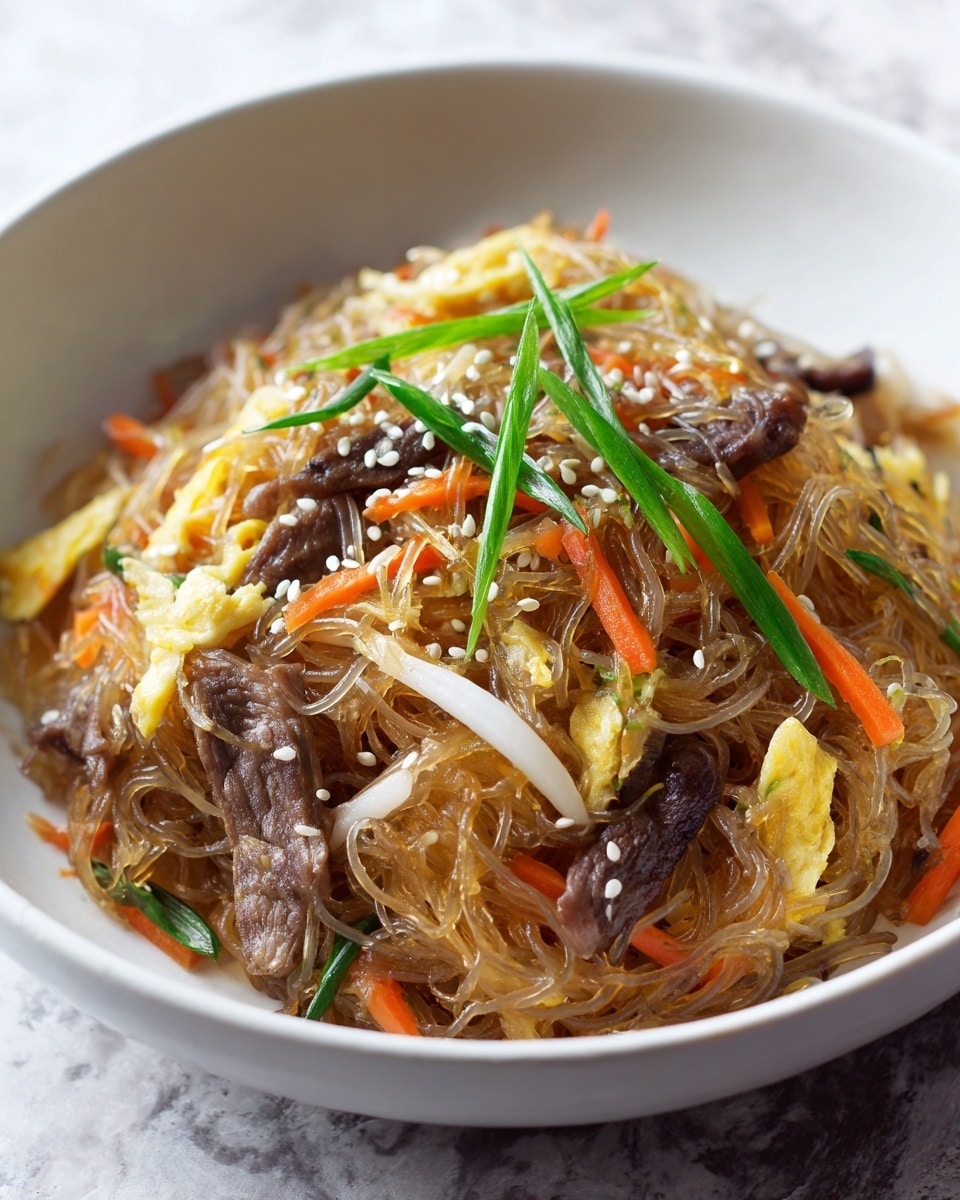
Ingredients
- 12 ounces sweet potato glass noodles
- 16 ounces beef or pork, cut into strips (flank, skirt, ribeye, or pork)
- 2 large eggs, beaten
- 1 large carrot, peeled and julienned
- 1 medium yellow onion, thinly sliced
- 3 mushrooms, thinly sliced (any variety)
- 2 cups baby spinach, packed
- 2 stalks green onion, cut into 1-inch pieces
- Oil for cooking
- Toasted sesame seeds (optional, for garnish)
- Salt and black pepper, as needed
- 7 tablespoons soy sauce (light sodium)
- 3 tablespoons honey (or more brown sugar)
- 2 tablespoons brown sugar (light or dark)
- 2 tablespoons toasted sesame oil
Instructions
- Step 1: Make the japchae sauce by mixing together soy sauce, honey, brown sugar, and toasted sesame oil. Set aside.
- Step 2: Cook the sweet potato noodles in a large pot of boiling water for 10–15 minutes, stirring occasionally to prevent sticking. Drain and rinse with cold water until completely cooled. Drain well and optionally cut into shorter pieces using kitchen shears.
- Step 3: Prepare the egg crepe by heating a bit of oil in a nonstick pan over medium heat. Pour in the beaten eggs, tilt the pan to create a thin layer, and cook until set. Flip briefly to cook the other side. Remove, cool, fold in half, and slice into thin strips.
- Step 4: In the same pan over medium-high heat, heat a small amount of oil. Season the beef or pork with salt and pepper, then sear until browned and cooked through, about 4–5 minutes. Remove and set aside.
- Step 5: Sauté the vegetables in the same pan with a little oil over medium heat. Add them in order of hardness, seasoning lightly with salt and pepper between each addition: carrots first for 15–30 seconds, then onions and green onion bottoms, followed by mushrooms, spinach, and finally green onion tops. Cook until just tender, then remove.
- Step 6: Heat the japchae sauce in the pan over medium heat, stirring occasionally until sugar dissolves and the sauce bubbles. Reduce heat to low.
- Step 7: Add the noodles to the sauce and toss to coat evenly. Then add the cooked vegetables, beef or pork, and egg strips. Toss until everything is well combined. Remove from heat.
- Step 8: Serve the japchae either plated or family style with a sprinkle of toasted sesame seeds. Enjoy hot, warm, room temperature, or slightly chilled.
Tips & Variations
- Use kitchen shears to cut noodles into shorter pieces for easier eating.
- Feel free to substitute beef with pork or even tofu for a vegetarian option.
- Add other vegetables like bell peppers or zucchini for extra color and flavor.
- Adjust sweetness by adding more honey or brown sugar to suit your taste.
- For a spicier kick, add a dash of gochujang (Korean chili paste) to the sauce.
Storage
Store japchae in an airtight container in the refrigerator for up to 3 days. Reheat gently in a pan over low heat or enjoy it cold. Avoid overheating to maintain the noodles’ chewy texture.
How to Serve
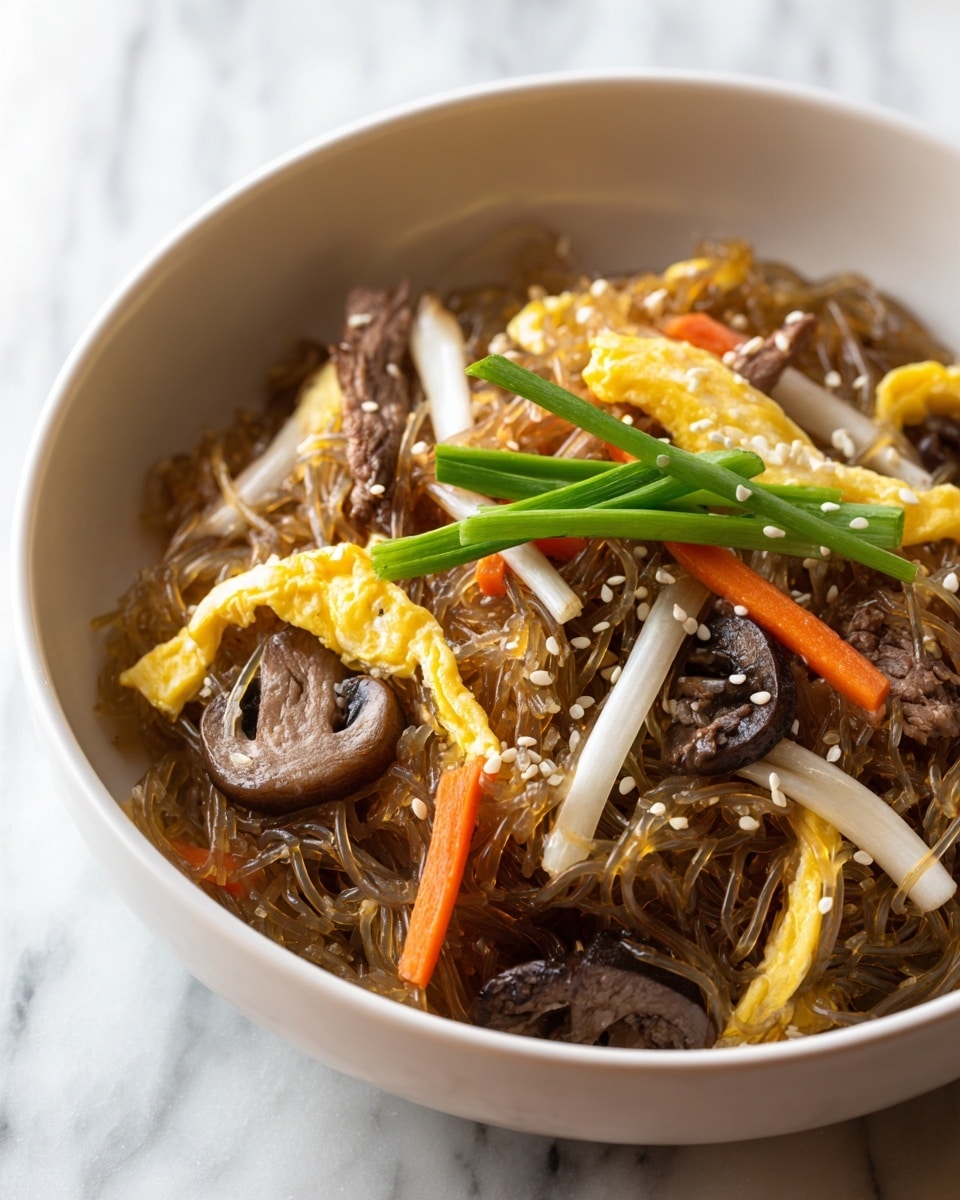
Serve this delicious recipe with your favorite sides.
FAQs
Can I use other types of noodles instead of sweet potato noodles?
Sweet potato glass noodles are traditional for japchae because of their chewy texture, but you can substitute with other translucent noodles like mung bean or vermicelli, though the texture will differ slightly.
Is japchae usually served hot or cold?
Japchae is versatile and delicious served hot, warm, at room temperature, or even slightly chilled, making it perfect for meals or potlucks.
Print
Japchae (Korean Glass Noodle Stir Fry) Recipe
- Total Time: 30 minutes
- Yield: 6 servings 1x
Description
Japchae is a classic Korean glass noodle stir-fry made with sweet potato noodles, thinly sliced beef or pork, colorful vegetables, and a savory-sweet sauce. This dish combines tender noodles with sautéed carrots, onions, mushrooms, spinach, and egg strips to create a harmonious medley of flavors and textures. Perfect for a quick weeknight meal or a festive occasion, japchae can be served hot or at room temperature with a sprinkle of toasted sesame seeds for garnish.
Ingredients
Noodles and Meat
- 12 ounces sweet potato glass noodles
- 16 ounces beef or pork (cut into strips; flank, skirt, ribeye, or pork shoulder works well)
Vegetables and Eggs
- 1 large carrot (peeled and julienned)
- 1 medium yellow onion (thinly sliced)
- 3 mushrooms (thinly sliced; any variety such as shiitake, button, or cremini)
- 2 cups baby spinach (packed)
- 2 stalks green onion (cut into 1 inch pieces)
- 2 large eggs (beaten)
Sauce and Seasonings
- 7 tablespoons soy sauce (light sodium)
- 3 tablespoons honey (or more brown sugar as substitute)
- 2 tablespoons brown sugar (light or dark)
- 2 tablespoons toasted sesame oil
- Oil for cooking (vegetable or canola oil recommended)
- Salt and black pepper (to taste)
- Toasted sesame seeds (optional, for garnish)
Instructions
- Make the japchae sauce: In a bowl, mix together soy sauce, honey, brown sugar, and toasted sesame oil until the sugar is dissolved. Set aside to allow flavors to meld.
- Cook the japchae noodles: Bring a large pot of water to a boil and add the sweet potato noodles. Boil for 10-15 minutes until tender, stirring occasionally to prevent sticking. Drain and rinse noodles thoroughly under cold running water to stop cooking. Drain well and optionally cut noodles into shorter pieces with kitchen shears for easier eating. Set aside.
- Make the egg crepe: Heat a nonstick pan over medium heat and lightly oil it. Pour in the beaten eggs, tilting the pan to spread the eggs into a thin, even layer. Cook until the bottom is set, then carefully flip and cook the other side briefly. Remove from pan and cool until easy to handle.
- Slice the egg: Fold the cooled egg crepe in half and cut into thin strips. Set aside for assembly.
- Cook the beef or pork: In the same pan, heat oil over medium-high heat. Add the meat strips, season lightly with salt and pepper, and sear until browned and cooked through, about 4-5 minutes. Remove from pan and set aside.
- Sauté the vegetables: Using the same pan over medium heat, add a little oil and sauté the vegetables in order of firmness, lightly seasoning with salt and pepper after each addition. Start with the carrots for 15-30 seconds, then onions and green onion bottoms, followed by mushrooms, then spinach, and finally the green onion tops. Cook each until just tender and remove from the pan.
- Heat the sauce: In a large pan or wok over medium heat, pour in the prepared japchae sauce and stir occasionally until the sugar dissolves completely and the sauce begins to bubble. Lower the heat to low.
- Add noodles and combine: Add the drained japchae noodles to the sauce and toss until noodles are well coated.
- Add remaining ingredients: Add the sautéed vegetables, cooked meat, and egg strips to the noodles. Toss gently to combine everything evenly. Remove from heat.
- Serve: Portion the japchae onto plates or serve family style. Garnish with toasted sesame seeds if desired. Japchae can be enjoyed hot, warm, at room temperature, or slightly chilled.
Notes
- Cutting the noodles shorter with kitchen shears makes eating japchae easier and more manageable.
- Adjust sweetness by varying honey or brown sugar according to personal taste.
- Use any mix of mushrooms you prefer; shiitake adds an earthy umami flavor.
- For a vegetarian version, omit the meat and increase vegetables or add tofu.
- Stir-fry vegetables quickly over medium heat to keep them tender-crisp.
- Japchae is delicious served cold or at room temperature, making it great for meal prep or picnics.
- Prep Time: 15 minutes
- Cook Time: 15 minutes
- Category: Main Dish
- Method: Stovetop
- Cuisine: Korean
Keywords: Japchae, Korean glass noodles, stir fry, sweet potato noodles, beef stir fry, vegetable stir fry, Korean cuisine